Listening
When someone tells us about a problem, the easiest temptation is to look for something we already know: a similar experience, a solution that worked, something we would do in their place.
But being in someone else's place is impossible.
That's why, first of all, we need to listen: make room, ask questions, understand not only what the difficulty is, but who the person experiencing it is.
Because an answer can be right for one person and completely useless to someone else.
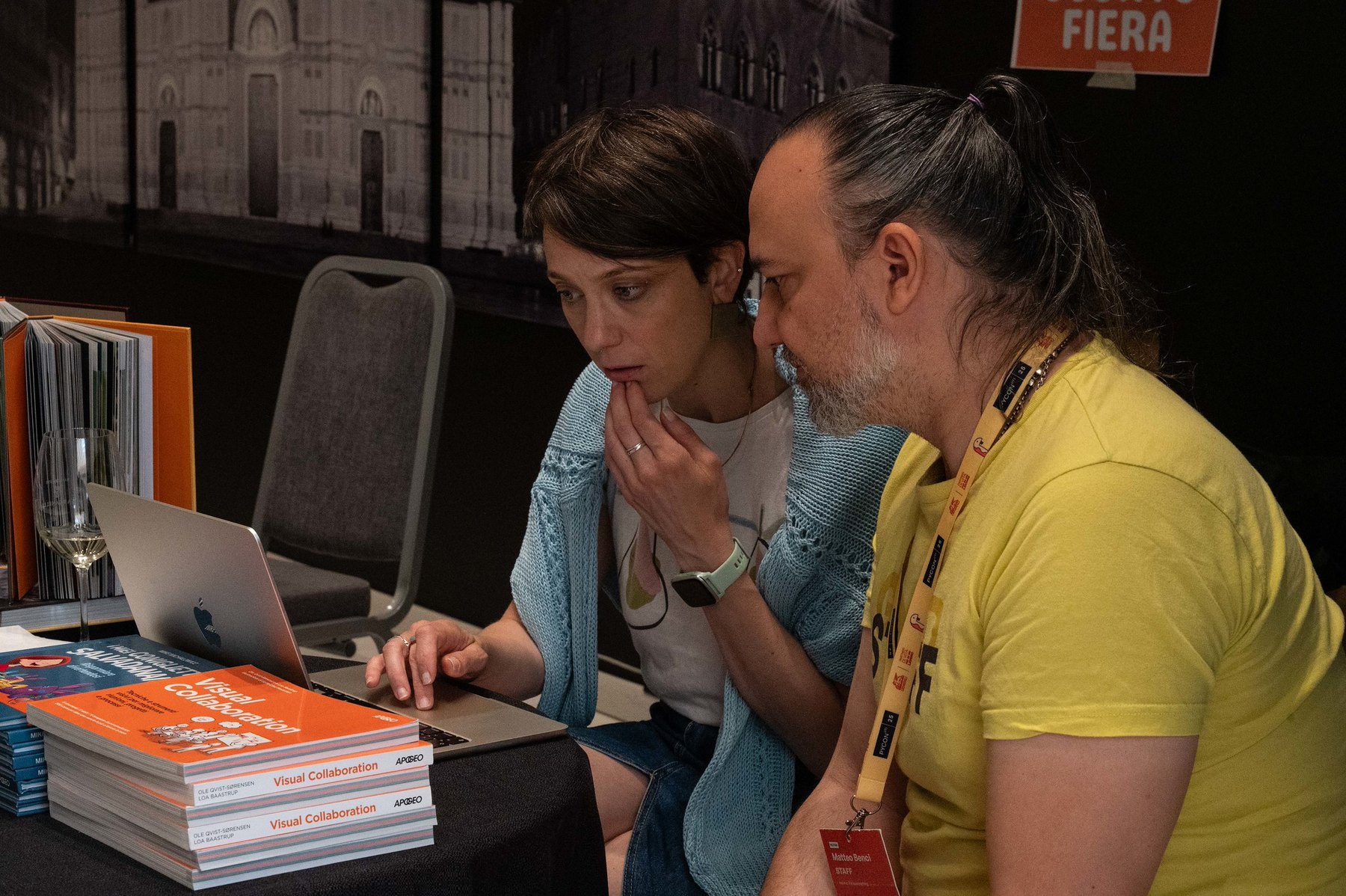
What we bring into a conversation isn't always everything we need to work through: very often, a question is more useful than an answer.
It can force us to look at something from a different perspective, question what seemed obvious, or simply give a name to something that until then had remained unclear.
I don't think my role is to point someone in a direction. I prefer trying to create more space for people to find one.
What I've learned isn't an answer
Over the years, I've moved through technology, event organization, communities, people management, and very different kinds of projects.
I've learned by doing things that worked, but much more by doing things that didn't work at all, and all of this has left me with experiences, tools and perspectives that I can make available to someone else.
But experience gains depth when it stops being used to judge and truly becomes a shared tool for growth.
It's not about saying, “this is what I did”; it's about asking, “have you tried looking at it from here?”
I don't think of mentoring as someone teaching and someone else learning. I think of it as two people with different experiences, and something that one of them is trying to understand, change or build.
I can ask questions, share what I've experienced, suggest a perspective that perhaps hadn't entered the conversation yet, and the other person can do exactly the same with me.
Because truly listening means, above all, being willing to question yourself and being ready to change.
Can I be useful?
It happened during EuroPython (opens in a new tab), in Kraków, while I was with other organizers. There were different communities, different problems, and people trying to understand how to approach them.
I had years of events, attempts, mistakes and things I'd learned along the way, and we started talking about them.
I didn't have a solution for those people and, more importantly, I didn't know their communities well enough to pretend I had one. But I could listen, ask questions, share what I'd seen work and what hadn't, and try with them to look at those problems from a few different angles.
That's when I realized that what I'd learned could be useful outside the contexts where I'd learned it. Then, I realized how much I enjoyed helping others.
Sometimes it's enough to walk away with a better question, with a possibility we hadn't considered before, a problem seen from a different perspective, or simply a little more clarity about what we really want.
I don't know what the right answer is for the person in front of me, and that's precisely why I want to listen to them.